• Home
  • About
  • Contact
  • Samui Insects
    • Butterflies

    • Papilionidae
    • Pieridae
    • Nymphalidae - Danainae

    • Nymphalidae - Satyrinae
    • Nymphalidae - Morphinae
    • Nymphalidae - Acraeinae,Nymphalinae,Charaxinae

    • Lycaenidae, Riodinidae
    • Hesperiidae
    • Dragonflies and Damselflies

    • Amphipterygidae
    • Caliphaeidae
    • Calopterygidae
    • Chlorocyphidae
    • Euphaeidae
    • Chlorolestidae

    • Lestidae
    • Megapodagrionidae
    • Coenagrionidae
    • Platycnemididae
    • Platystictidae
    • Protoneuridae

    • Aeshnidae
    • Gomphidae
    • Cordulegastridae
    • Chlorogomphidae
    • Corduliidae
    • Libellulidae
  • Cercopoidea
  • Expeditions
  • Galleries
    • Coleoptera(Beetles)

    • Cicindelidae
    • Lucanidae
    • Scarabaeidae
    • Buprestidae
    • Cerambycidae

    • Lepidoptera(Moths)

    • Sphingidae
    • Notodontidae
    • Noctuidae
    • Erebidae -Arctiinae
    • Erebidae -Lymantriinae
    • Erebidae -Other Subfamilies
    • Eutelidae
    • Geometridae
    • Other Families
    • Macro Species needing identification
    • Crambidae
    • Micro Species needing identification

    • Hymenoptera(Bees & Wasps)


      • Mantodea(Praying Mantids)


        • Orthoptera(Grasshoppers & Crickets)


          • Hemiptera(True Bugs)

          • Cercopoidea (New page)
          • Membracoidea - Cicadellidae
          • Membracoidea - Membracidae
          • Fulgoroidea - Cixiidae
          • Fulgoroidea - Fulgoridae
          • Fulgoroidea - Flatidae
          • Fulgoroidea - Eurybrachidae
          • Fulgoroidea - Issidae
          • Fulgoroidea - Lophopidae
          • Fulgoroidea - Ricaniidae
          • Fulgoroidea - Others
          • Reduvioidea/Miroidea
          • Pyrrhocoroidea
          • Lygaeiodea
          • Coreoidea
          • Pentatomoidea - Pentatomidae
          • Pentatomoidea - Scutelleridae
          • Pentatomoidea - Tessaratomidae
          • Pentatomoidea - Others

            • Other Families

Insects >> Butterflies >> Nymphalinae >> Lexias dirtea merguia
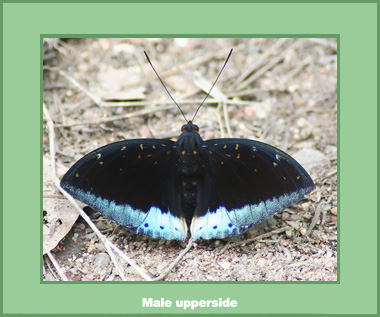


Lexias dirtea merguia


Lexias dirtea merguia - Male Lexias dirtea merguia - Male

<< Back to Nymphalinae overview

Tytler 1926 - The Black-Tip Archduke

Koh Samui only.

The two Lexias species found on Samui are impossible to tell apart on the wing. The most obvious difference is that this species has black tips to its antennae, and the other has orange tips. Both species show strong sexual dimorphism.

This is an uncommon forest species, and can often be found, in season, feeding of fallen fruit.

Flight Period

JanFebMarAprMayJunJulAugSepOctNovDec
xx x               x  

Wingspan

65 - 90mm

Early Stages

Fully known. More detailed life history information is available from the following resources: S. Igarishi - Life Histories of Asian Butterflies, Volume.1 , Page 440.

Larval Foodplant

Garcinia laterifolia and Cratoxylon maingayi (both Hypericaceae)

Range

S. Burma, peninsular Thailand and the Malay Peninsular. Other subspecies from Bhutan to Sundaland, Lesser Sunda Islands and the Philippines.

Home | About | Insects | Cercopoidea | Expeditions | Galleries | Contact | Links and Resources | Disclaimer | Privacy | Sitemap

© 2000-2021 www.Samuibutterflies.com and Les Day
Design and Development by tomjansen.net