• Home
  • About
  • Contact
  • Samui Insects
    • Butterflies

    • Papilionidae
    • Pieridae
    • Nymphalidae - Danainae

    • Nymphalidae - Satyrinae
    • Nymphalidae - Morphinae
    • Nymphalidae - Acraeinae,Nymphalinae,Charaxinae

    • Lycaenidae, Riodinidae
    • Hesperiidae
    • Dragonflies and Damselflies

    • Amphipterygidae
    • Caliphaeidae
    • Calopterygidae
    • Chlorocyphidae
    • Euphaeidae
    • Chlorolestidae

    • Lestidae
    • Megapodagrionidae
    • Coenagrionidae
    • Platycnemididae
    • Platystictidae
    • Protoneuridae

    • Aeshnidae
    • Gomphidae
    • Cordulegastridae
    • Chlorogomphidae
    • Corduliidae
    • Libellulidae
  • Cercopoidea
  • Expeditions
  • Galleries
    • Coleoptera(Beetles)

    • Cicindelidae
    • Lucanidae
    • Scarabaeidae
    • Buprestidae
    • Cerambycidae

    • Lepidoptera(Moths)

    • Sphingidae
    • Notodontidae
    • Noctuidae
    • Erebidae -Arctiinae
    • Erebidae -Lymantriinae
    • Erebidae -Other Subfamilies
    • Eutelidae
    • Geometridae
    • Other Families
    • Macro Species needing identification
    • Crambidae
    • Micro Species needing identification

    • Hymenoptera(Bees & Wasps)


      • Mantodea(Praying Mantids)


        • Orthoptera(Grasshoppers & Crickets)


          • Hemiptera(True Bugs)

          • Cercopoidea (New page)
          • Membracoidea - Cicadellidae
          • Membracoidea - Membracidae
          • Fulgoroidea - Cixiidae
          • Fulgoroidea - Fulgoridae
          • Fulgoroidea - Flatidae
          • Fulgoroidea - Eurybrachidae
          • Fulgoroidea - Issidae
          • Fulgoroidea - Lophopidae
          • Fulgoroidea - Ricaniidae
          • Fulgoroidea - Others
          • Reduvioidea/Miroidea
          • Pyrrhocoroidea
          • Lygaeiodea
          • Coreoidea
          • Pentatomoidea - Pentatomidae
          • Pentatomoidea - Scutelleridae
          • Pentatomoidea - Tessaratomidae
          • Pentatomoidea - Others

            • Other Families

Insects >> Butterflies >> Nymphalinae >> Athyma perius perius
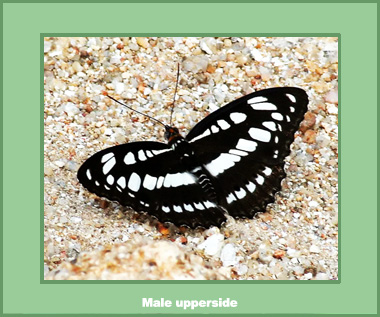
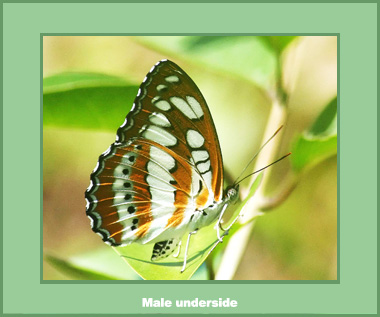

Athyma perius perius


Athyma perius perius - Male Athyma perius perius - Male

<< Back to Nymphalinae overview

Linnaeus 1758 - The Common Sargeant

Koh Samui only.

This species can be easily identified by having the forewing cell stripe divided into four, and there are black spots on the underside only of the hindwing submarginal stripe. It is usually found periodically at forest edges and secondary growth, but oddly, has also been found in an area of mangrove on the island in some numbers.

Flight Period

JanFebMarAprMayJunJulAugSepOctNovDec
xxx           xx   

Wingspan

45 - 55mm

Early Stages

Fully known. More detailed life history information is available from the following resources: S. Igarishi - Life Histories of Asian Butterflies, Volume.2 , Page 481.

Larval Foodplant

Various Glochidium species (Euphorbiaceae)

Range

India to S. China, through the Malay Peninsular to the Lesser Sunda Islands.

Home | About | Insects | Cercopoidea | Expeditions | Galleries | Contact | Links and Resources | Disclaimer | Privacy | Sitemap

© 2000-2021 www.Samuibutterflies.com and Les Day
Design and Development by tomjansen.net